
From neem leaves to friendly fungi, India is rediscovering nature’s own ways to fight the tiny bloodsuckers that cost the livestock sector billions.
India is home to over 193 million cattle and 110 million buffaloes; more than 23% of global milk production comes from this country. But lurking on the skin of these animals is a tiny enemy: the tick. These blood-sucking parasites are not just a nuisance; they cause anaemia, reduce milk yield, retard growth, and transmit deadly diseases like babesiosis, theileriosis, and anaplasmosis. Each tick sucks no fewer than 30 drops of blood to complete its life cycle. Multiply that by thousands of ticks on a single animal, and the loss is staggering.
For decades, Indian farmers have relied on chemical acaricides; synthetic pesticides designed to kill ticks. But this approach is failing. Ticks across the country have developed resistance to multiple classes of chemicals. The cost of tick control in India has been estimated at more than ₹2,000 crore per annum. Chemical residues contaminate milk and meat, harming both human health and India’s export potential.
The good news? India is rich in alternatives. From traditional herbal knowledge to cutting-edge biological solutions, a quiet revolution is underway in tick management; one that is sustainable, cost-effective, and kind to the environment.
The Problem with Chemicals
The overuse of chemical acaricides has created a vicious cycle. Farmers apply more chemicals as ticks become resistant; ticks evolve faster resistance; and the environment and animal products suffer. Multi-acaricide-resistant tick populations are now reported from different parts of the country.
India faces an “urgent need for a national tick surveillance and resistance management program supported by policy reforms, veterinary training and sustained investment”. The solution, experts agree, lies not in a single magic bullet but in an Integrated Tick Management (ITM) approach that combines multiple sustainable strategies.
Herbal and Plant-Based Acaricides: India’s Traditional Wisdom
India’s indigenous knowledge systems have long recognized the tick-repelling properties of certain plants. Today, science is validating what traditional farmers have known for generations.
The NIF Poly Herbal Medication
The National Innovation Foundation (NIF), under India’s Department of Science and Technology, has developed a Poly Herbal Medication using two common plants: Neem (Azadirachta indica) and Monk Pepper (Vitex negundo, locally known as Nagod or Mala).
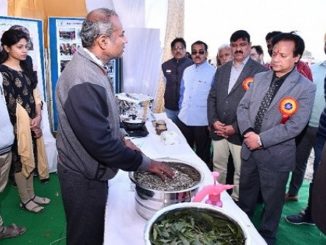
The preparation is remarkably simple. Freshly collected leaves of neem (2.5 kg) and monk pepper (1 kg) are soaked overnight in lukewarm water. The extracts are filtered and mixed in a 3:1 ratio (neem:monk pepper), then diluted with water for application. Field trials involving 203 animals across 47 farms in three Haryana districts showed that this herbal solution significantly reduced tick populations.
Plant materials like these contain bioactive compounds such as alkaloids, flavonoids, and terpenoids that act as insecticides, growth inhibitors, anti-molting agents, and repellents.
Other Promising Plants
Research has identified many other Indian plants with acaricidal properties:
- Calotropis procera (Madar) and Lantana camara: Ethanolic extracts of procerashowed 100% inhibition of egg-laying in ticks at higher concentrations and caused up to 75.99% larval mortality. These findings indicate significant potential as eco-friendly alternatives in integrated pest management.
- Lemon grass oil: Studies have shown that lemongrass oil, when applied over 12 days, achieved efficacy comparable to synthetic acaricides like fipronil, amitraz, and deltamethrin.
- Cinnamaldehyde, menthol, eugenol, and citral: These plant-derived compounds have been identified as promising candidates for developing acaricides against resistant tick populations.
IVRI’s Phyto-Formulation
The ICAR-Indian Veterinary Research Institute (IVRI) has developed a safe, chemically characterized anti-tick phyto-formulation extracted from commonly available plants that require very low agronomic conditions to grow. What makes this formulation remarkable:
- Effective against acaricide-resistant ticks
- >80% clinical efficacy against natural tick infestations
- Safe for animals
- Stable at different temperatures (0-4°C, 37°C, and 60°C) for 30 days
- No residual toxicity in milk and meat products
- Fly repellent properties
Perhaps most importantly, the formulation has less chance of resistance development because it contains multiple active principles working together.
Biological Control: Nature’s Tiny Warriors
Entomopathogenic Fungi
These are fungi that infect and kill insects and ticks and they are proving to be among the most promising biological control agents.
Metarhizium anisopliae is a fungus that has been extensively studied against the cattle tick Rhipicephalus (B.) microplus. Research has shown that treating engorged female ticks and their eggs with this fungus causes:
- Mortality of adult ticks
- Reduction in egg-laying capacity
- Reduced hatchability of eggs
The effect is concentration-dependent: higher concentrations of fungal spores lead to greater mortality and lower hatching rates. As researchers concluded, biological control using M. anisopliae “might constitute an additional method to integrated tick management”.
Other fungi like Beauveria bassiana have also been evaluated against tick larvae. In Chhattisgarh, researchers have isolated naturally occurring entomopathogenic fungi from infected ticks collected directly from animals. Aspergillus amstelodami is another species being studied as a biological control agent.
Biological control using entomopathogenic fungi is considered the most economical and safest method to overcome the risks of acaricidal resistance and environmental contamination.
Predators: Birds, Ants, and Spiders
Ticks have natural enemies too. Ants, spiders, birds, rodents, lizards, shrews, and domestic chickens all feed on ticks. A particularly interesting finding from ICAR research: introducing poultry birds in animal sheds reduced tick load by 95%.
While most of these predators are generalists and their impact on tick populations may be limited, they contribute to the overall ecological balance and can be part of an integrated strategy.
Parasitoid Wasps
Certain hymenopteran wasps belonging to the genera Ixodiphagus and Hunterellus are parasitoids of ticks. These tiny wasps lay their eggs inside ticks, eventually killing them. While research in India is still limited, this represents a promising frontier.
Integrated Tick Management: The Only Sustainable Way
Integrated Tick Management (ITM) is the only suitable option for controlling ticks and tick-borne diseases in India. Rather than depending heavily on any single measure, ITM combines:
- Host genetics: Indigenous cattle breeds often have natural resistance to ticks; thicker skin, higher sweat gland density, and better inflammatory responses. Promoting these breeds can reduce reliance on chemicals.
- Biological control: Entomopathogenic fungi, predators, and parasitoids
- Phyto-acaricides: Plant-based solutions like the ones discussed above
- Habitat management: Reducing tick-friendly environments
- Monitoring and early detection of acaricide resistance
One of the key elements of effective ITM is monitoring and knowing when and where ticks are present, and whether the chemicals being used are still effective.
Emerging Technologies: Vaccines and Pheromone Traps
Tick Vaccines
India has made significant progress in tick vaccine research. Scientists at ICAR have explored the use of salivary gland antigens, concealed antigens, and commercial vaccines. A recent breakthrough involved a cocktail vaccine that showed 70% efficacy against Hyalomma anatolicum larvae and 76% against adults, and 54% against Rhipicephalus microplus infestations. However, no tick vaccine is yet commercially available in India. The path from laboratory to farmer’s field remains long.
Pheromone Traps
Another innovative approach uses pheromones, chemical signals that ticks use to communicate to lure ticks into traps. Researchers have developed sticky traps baited with assembly pheromones that attract and capture ticks.
Solar-powered tick traps with pheromone lures have also been evaluated. These off-host control methods target ticks in the environment rather than on the animal, reducing the need for chemical applications directly on livestock.
A Vision for the Future
The shift from chemical-heavy tick control to sustainable alternatives is not just an environmental choice rather it is an economic necessity. With India’s dairy sector aiming to expand its global footprint, chemical residues in milk and meat are a non-tariff barrier to exports.
A One Health perspective, recognizing the interconnection between human, animal, and environmental health is essential. The overuse of chemicals affects not just livestock but also the soil, water, and ultimately human consumers.
Researchers advocate for a shift “from the reactive drug-heavy interventions to a proactive and ecologically grounded tick management”. This means:
- Investing in research on herbal and biological alternatives
- Training veterinarians and farmers in integrated approaches
- Policy support for sustainable tick management
- Documenting and validating traditional knowledge
- Developing commercial formulations that are affordable for smallholder farmers
Conclusion
India’s battle against ticks is at a crossroads. The chemical path has led to resistance, environmental damage, and economic loss. But the alternative path, rooted in traditional wisdom, validated by modern science, and guided by ecological principles offers a sustainable way forward.
From the neem and monk pepper leaves of Haryana’s dairy farms to the fungal spores being tested in Maharashtra’s laboratories, India is rediscovering that the best solutions are often the ones that work with nature, not against it. The tiny tick may be a formidable foe, but India’s farmers, scientists, and traditional knowledge holders are proving that nature’s own arsenal; herbal extracts, friendly fungi, and ecological balance can win the battle without poisoning the planet.


Be the first to comment