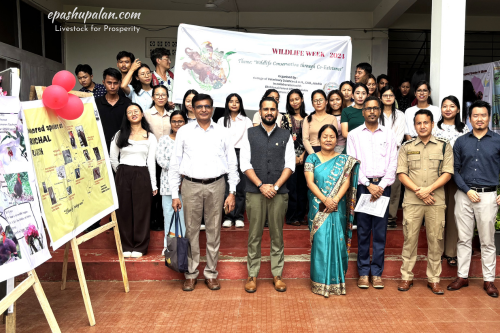
World Wildlife Week-2024 Celebration
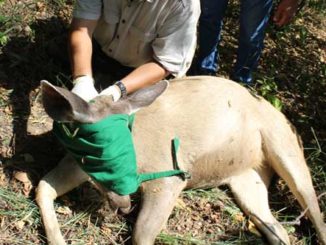
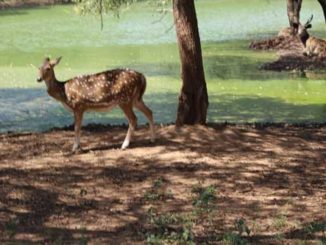
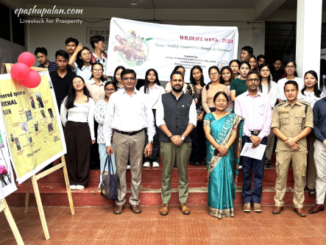
College of Veterinary Sciences and Animal Husbandry, CAU, Jalukie and Divisional Forest Office, Jalukie, Govt. of Nagaland jointly organized the “World Wildlife Week-2024” on 2nd and 3rd of Oct’ 2024. >>>
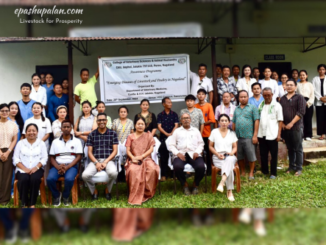
Department of Veterinary Medicine, College of Veterinary Sciences and Animal Husbandry, Jalukie, Nagaland organized an awareness programme on “Emerging diseases of Livestock and Poultry in Nagaland” for Livestock and Poultry Farmers in Peren district of Nagaland” >>>
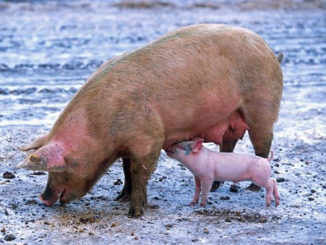
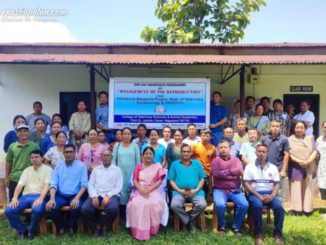
A one day awareness programme on Management of Pig Reproduction is organized by the Department of VGO, College of Veterinary Sciences and Animal Husbandry, Jalukie, Nagaland” for pig breeders. >>>
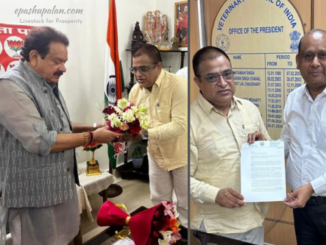
Dr. Kailash Uniyal, President of the Uttarakhand Veterinary Council, held a formal meeting today with Shri S.P. Baghel, Hon’ble Minister of State Government of India, and Dr. Umesh Chandra Sharma, President VCI. >>>
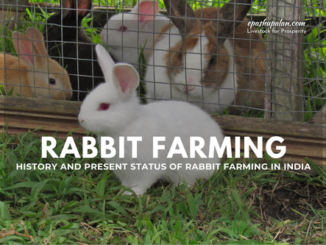
Rabbits belong to the order of mammals called Lagomorpha, which includes 40 or so species of rabbits, hares and Pikas. Fossil records suggest that Lagomorpha evolved in Asia at least 40 million years ago, during the Eocene period. >>>
Water intoxication is a condition that occurs when excessive quantities of water are ingested by very thirsty animals. It commonly occurs in animals that have been subjected to >>>
Ruminants are one of the most successful groups of herbivorous mammals on the planet, with around 200 species represented by approximately 75 million wild and 3.5 billion domesticated individuals worldwide. Humans domesticated these animals in the Neolithic era (Ajmone-Marsan et al., 2010) and have been farming them ever since for the production and consumption of animal protein in the form of meat and milk. >>>
The egg is widely used in the food manufacturing and food processing industries. Eggs are used in large quantities in products such as cakes, salads, food decorations, and fast food, wasting many to >>>
It is most frequently encountered problem in equines and multifactorial in origin. Clinically, disease is characterized by varying degree of signs of abdominal pain, and dehydration-electrolyte balance. On the basis of different factors involved in its causation colic can be classified into four types >>>
Development of livestock sector is not only important for overall economic growth, but it is also essential for improving the economic condition of a large number of poor rural households >>>
In a country where animals are worshipped as deities, depended upon as livelihood, and yet often neglected in suffering, the role of a veterinarian exists in a quiet paradox. We are neither fully seen nor entirely invisible, standing at the intersection of compassion, science, and silent service. >>>
College of Veterinary Sciences and Animal Husbandry, CAU, Jalukie and Divisional Forest Office, Jalukie, Govt. of Nagaland jointly organized the “World Wildlife Week-2024” on 2nd and 3rd of Oct’ 2024. >>>
In today’s world, every pet owner wants the best possible care for their furry friend. Advances in veterinary medicine have led to improved diagnostic tools, and one of the most significant game changers is CT scan. A CT scan (computed tomography) is a non-invasive diagnostic tool that uses X-rays and computer technology to produce detailed cross-sectional images of the body. In veterinary medicine, CT scans are used to visualise internal structures, diagnose disease, and guide treatment plans >>>
Department of Veterinary Medicine, College of Veterinary Sciences and Animal Husbandry, Jalukie, Nagaland organized an awareness programme on “Emerging diseases of Livestock and Poultry in Nagaland” for Livestock and Poultry Farmers in Peren district of Nagaland” >>>
A one day awareness programme on Management of Pig Reproduction is organized by the Department of VGO, College of Veterinary Sciences and Animal Husbandry, Jalukie, Nagaland” for pig breeders. >>>
Dr. Kailash Uniyal, President of the Uttarakhand Veterinary Council, held a formal meeting today with Shri S.P. Baghel, Hon’ble Minister of State Government of India, and Dr. Umesh Chandra Sharma, President VCI. >>>
Stem cells are very important in veterinary medicine for various reasons. Numerous stem cell treatments are now being administered to animal patients; some of these have proven beneficial in the market, such as mesenchymal stem cell >>>
Mastitis is one of the most important economical diseases of dairy cattle. Generally, the clinical form of mastitis divided into mild, moderate or severe. >>>
Canine babesiosis is a serious disease among tick-borne haemoprotozoan diseases, globally. Canine babesiosis can range from chronic or subclinical to peracute and fatal, depending on the virulence of the species and the susceptibility of the host. >>>
Breeding Seasons Dairy goats are usually seasonal breeders. Most breeding occurs in late summer through >>>
Wildlife traditionally refers to undomesticated animal species, but has come to include all organisms that grow or live wild in an area without being introduced by humans. >>>
The total Pigs in the country is 9.06 Million in the current Census 2019, declined by 12.03% over the previous Census (2012). About 1.7% of the total livestock is contributed by pigs. >>>
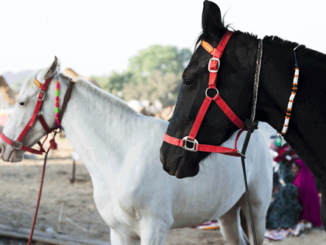
Basic requirements of horses are shelter, feed, water, grooming, waste removal and exercise that will be discussed in this article. >>>
In India, raising cattle has long been a traditional source of income and is strongly associated with the agricultural sector. According to the 20th Livestock Census 2019, India has 192.41 million cattle, among which 142.11 million i.e. 73.83%, are indigenous >>>
Rabbits belong to the order of mammals called Lagomorpha, which includes 40 or so species of rabbits, hares and Pikas. Fossil records suggest that Lagomorpha evolved in Asia at least 40 million years ago, during the Eocene period. >>>
The feeding of ruminant livestock in many countries of the world is dependent on readily available low quality roughages or crop residues. In poorer countries that are densely populated >>>
Obstacles due to foetal monstrosities during parturition leads to dystocia and it is commonly observed in bovine. Dystocia due to dicephalus monster calf and its successful management by caesarean >>>
Antimicrobial Resistance (AMR) refers to the ability of a microorganism to survive and grow in the presence of antimicrobial drugs. This occurs when bacteria >>>
The term zoonosis is derived from Greek word Zoon means “animals” and nosos means “sickness”. The World Health Organisation (WHO) defines zoonosis as any disease or infection that is naturally transmissible from vertebrate animals to humans. >>>
Milk is the complete food. It contains in a balanced form of all the necessary and digestable elements for building and maintaining the human and animal body. In addition, it contains immunoglobulins which protect the newly born against a number of diseases’. >>>
Pneumonia is the inflammation of the pulmonary or lung parenchyma. It is usually accompanied by bronchitis and pleurisy. If pneumonia accompanied by bronchitis is called as bronchopneumonia >>>
With more than 31,000 confirmed cases of monkeypox worldwide, health authorities are warning that it’s not just people who are at risk from the disease even pets can get monkeypox, too. With monkeypox spreading in humans throughout the world, veterinarians have begun to worry about the increased risk of monkeypox spreading from humans to animals. >>>
Value of vaccination is the theme for the celebration of world veterinary day 2019 by World veterinary association (WVA). This shows the importance of vaccination in veterinary practices. >>>
What is Ruminal Tympany? Ruminal tympany or bloat is a clinical condition in which the excessive accumulation of gas occurs in the rumen which results in distension of left abdominal wall. >>>
Toxoplasmosis is an infection caused by Toxoplasma gondii. It can be found in cat faeces and undercooked meat, especially lamb and pork. It can also be transmitted through contaminated water. Toxoplasmosis can be deadly or cause serious birth defects for a foetus if the mother becomes infected. >>>
The third eyelid, also known as haws or nictitating membrane is a structure found in eyes of reptiles, birds and some mammals. It is a mobile, protective and glandular structure lying between cornea and lower eyelid in medial portion of the inferior conjuctival sac. >>>
With the passage of time, humans have evolved and so have the B species. Dogs have found themselves in a plethora of roles viz. wild animals, hunter animals, pet animals and now companion animal, rather they are considered at times a family member. >>>